
Everything I thought I knew about catechesis was wrong.
When I was in my 30s, I began a career in Catholic publishing. I didn’t know anything about publishing, but I knew a lot about liturgy. My foot in the door was to edit a monthly magazine that was all about how to celebrate parish liturgy.
I was eventually promoted to the position of editorial director. That meant that I was not only in charge of the liturgy magazine, but also the company’s book line. We published books in three areas: liturgy, spirituality, and catechesis.
My weakest skill set was “catechesis.” Coincidentally, the Vatican’s General Directory for Catechesis was published about the same time that I got promoted. I read it cover to cover. And I was shocked.
Three things I got wrong
I discovered three things I had gotten wrong about catechesis:
- Catechesis doesn’t happen primarily in a classroom
- Catechesis is an extension of and preparation for the liturgical encounter with Jesus Christ
- Catechesis utilizes a pedagogy of accompaniment
The miracle that stopped at the altar
I understood the theology of that second point well before I understood what it asked of me. One of the professors in my graduate school at St. John’s University, Fr. Godfrey Diekmann, OSB, once asked, “What difference does it make if the bread and wine turn into the Body and Blood of Christ and we don’t?”
In my grade school religion classes, I learned in detail when and how the bread and wine “transubstantiated” into the Body and Blood of Jesus in the Mass. I was and am moved by the miracle of that gift every time. But for a long time, the miracle stopped at the altar. I hadn’t yet learned how to let it change me.
A grandmother looking for a little grace
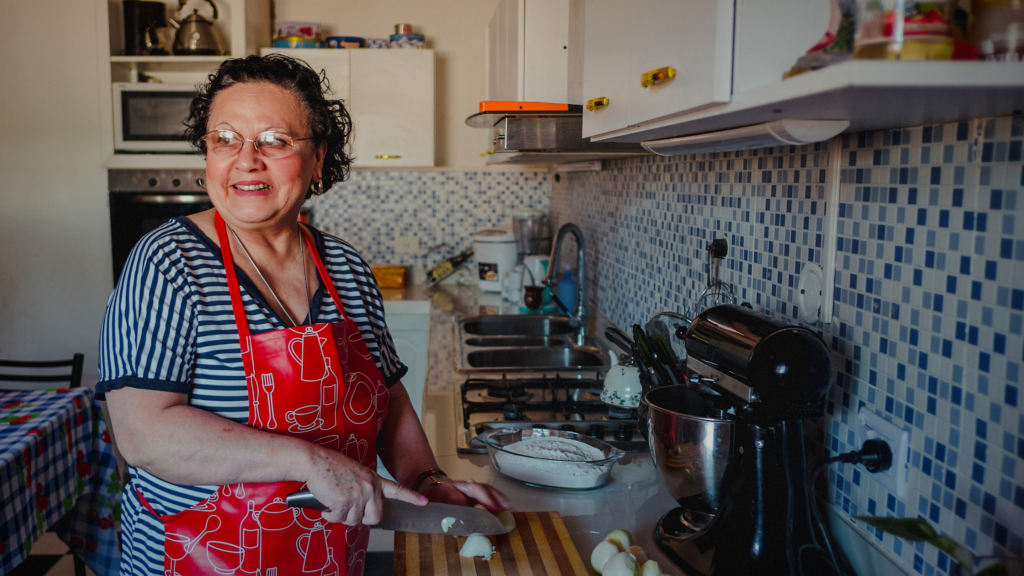
A few years later, I got my first real lesson in what that meant. It started with a long, difficult conversation with a Mexican grandmother. My Spanish was very bad and her English was not much better. Her 9-year-old grandson was translating for us.
She wanted her grandson to be baptized. She also wanted her older grandchildren, the boy’s cousins, who were already baptized, to celebrate first communion. When I explained that her unbaptized grandson would celebrate all three initiation sacraments at the Easter Vigil, she requested the cousins also celebrate confirmation at the same time.
Diocesan policy didn’t allow it, since the cousins were too young. Try as I might, I couldn’t make that clear to her in a way that didn’t sound like a wall going up between her family and the sacraments.
I was stuck in the role of “teacher,” trying to explain policy and theology to a woman who only wanted to share the grace of the sacraments with her grandbabies.
My “expertise” was not what she needed
I was stuck in the role of “teacher,” trying to explain policy and theology to a woman who only wanted to share the grace of the sacraments with her grandbabies. I had clearly failed to “change” into the Body of Christ who, no matter what, always accompanies the seeker, walking with them in their deepest need and longing with them for their deepest desire.
This is important because up until that moment, I thought the primary role of a catechist was to explain and even defend church teaching. Pope Francis once said about catechists, “We need creative people who proclaim the Gospel, but who proclaim it neither with a mute nor with a loudspeaker, but rather with their life, with gentleness, with a new language, and opening new ways” (December 2021).
What that gentle woman needed from me at that moment wasn’t a rule book. It was gentleness, in a new language she could understand — one that would have let her see the face of Christ and feel the action of the Holy Spirit in our encounter.
Becoming the lesson plan
Here’s the thing I have tried hard to remember ever since that day. Everyone is that Mexican grandmother who doesn’t understand the language I speak. My job is to sit still with the terror of that reality when a seeker asks some version of, “How do I become Catholic?”
If I run to the rule book, it’s game over. What I try to do — and what I would ask any catechist to do — is just breathe in the Holy Spirit at that moment. Look into the person’s eyes. Look at their hands. Listen to their breathing. Listen to their question behind the question. Ask yourself, “What is the gentlest possible response I can make in this moment?” And how can you make that response in “a new language” that your seeker will understand?
That’s the other thing I’d gotten wrong at the start of all this. Catechesis isn’t something that happens at a desk, with a curriculum and a rulebook. It happens in moments exactly like that one. The “lesson plan” is to be an authentic witness to the presence of Christ for the person standing in front of you.
I know a lot of you are already doing this, and you are much better at it than I am. But none of us is perfect. So the next time someone asks you some version of “How do I become Catholic?”, resist the urge to send them to the classroom or give them the rules. Just ask yourself, what is my “Mexican grandmother” moment — and how can I accompany them rather than explain rules to them?
The next time someone asks you some version of “How do I become Catholic?”, resist the urge to send them to the classroom or give them the rules.
What’s your “Mexican grandmother” moment?
I’d love to in the comments about the moment when you realized accompaniment mattered more than getting the answer right.










How do I become Catholic?
What is it you are looking for, peace, joy, happiness, forgivness?
Listen.
I know just the person you need to meet, Jesus.
Let me tell you about Him.
Awesome article (and yes, I’m still here!). I have this moment with just about every seeker that comes to us. Add to this, the come with certain expectations (usually wrong) that they got from family, friends, acquaintances, or the internet. I always have to redirect them from the “what” (what do I have to do, what will it take?) to the “why” (why are you seeking initiation, why do you want to do this?). More importantly, I train our secretarial staff (those often taking the initial phone calls) to avoid answering any questions and redirect them to my office so we can have the extended conversation we need. Too many parish offices will give a quick answer (usually a “no” or “call back in the fall”) to questions that are not as simple as the caller may think. Always take the time to talk with them and get to know them.