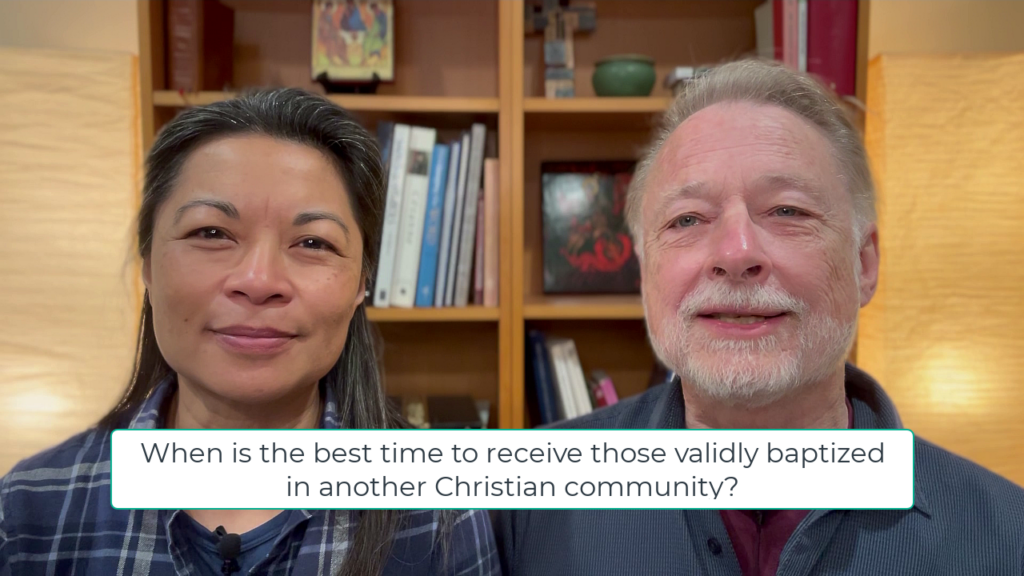
You may disagree. You may be giving the candidates as much attention as the elect. But what I mean by “overlooked” is that we often treat our baptized candidates very much like our unbaptized elect. We overlook the key difference between them and the elect—their baptism.
If we want to be faithful to the Order of Christian Initiation of Adults, we have to stop doing that. Baptized candidates are not “pseudo-catechumens.” They are our brothers and sisters in Christ, already initiated into his Body through a valid baptism that can never be repeated. As we walk with them on their Lenten journey, we need to ask ourselves: how are we honoring their baptismal dignity while still accompanying them toward full communion?
Understanding the distinction
The most important thing to remember is that baptism changes everything. Because candidates are already baptized, they are already in “partial communion” with us. Our goal during Lent is not to “initiate” them, but to help them deepen that communion until it becomes “full.”
This is why the rituals of Lent look different for them:
- The Book of Elect: Candidates do not sign the Book of Elect. Why? Because they have already been “elected” or chosen by God in the waters of baptism. Signing that book is a rite for those preparing for baptism.
- The scrutinies: The three scrutinies are specifically designed for the unbaptized. They include minor exorcisms intended to heal and strengthen the elect against the power of sin before their baptism. Since candidates are already baptized, these rites are not appropriate for them.
- The Easter Vigil: Normally, candidates should not be received into full communion at the Easter Vigil. The Vigil is the baptismal night of the church. While the US adaptations allow for a combined rite, the original vision of the Order of Christian Initiation of Adults is that candidates should be received at a Sunday Mass, usually in Ordinary Time.
Ritualizing Lent for candidates
So, if baptized candidates aren’t doing what the elect are doing, what are they doing? Lent should be a time of spiritual intense preparation for them, but it should be rooted in their identity as members of the baptismal priesthood.
- The Sacrament of Reconciliation: For the baptized, Lent is the premier season for the sacrament of penance. While the elect are celebrating the scrutinies to prepare for the washing away of sin in baptism, the candidates should be preparing for the healing of post-baptismal sin through individual confession. This is their primary penitential act of the season.
- Penitential Rite (Scrutiny): The Order of Christian Initiation of Adults provides an optional “Penitential Rite (Scrutiny)” for baptized candidates, usually celebrated on the Second Sunday of Lent. However, it is not the sacrament of penance. The sacrament of penance is a much richer and grace-filled way to ritualize contrition and reconciliation. I would steer the candidates to the parish reconciliation service and forego the optional penitential rite in the Order of Christian Initiation of Adults.
- The Rites of Handing On: These were previously called the Presentation Rites. If your candidates are truly uncatechized (meaning they were baptized but had no further formation), they can participate in the Handing On of the Creed and the Lord’s Prayer. However, if they are active Christians from another tradition who have prayed the Creed and the Our Father their whole lives, they would not celebrate these rites. We don’t want to “hand on” something they’ve already been praying for decades.
Our goal this Lent is to make sure our candidates feel like they are already members of the family rather than starting from scratch.
Spiritual accompaniment in Lent and Holy Week
The church has a rich treasury of rituals, devotions, and prayers that we can immerse our baptized candidates in during Lent. Here are some examples:
- Increased personal prayer, especially prayer for the catechumens
- Increased reading of scripture
- Increased acts of giving of time, talent, and treasure
- Weekday liturgy
- Fasting, especially on the Fridays of Lent
- Palm Sunday procession
- Stations of the Cross
- Adoration
- Rosary
- Nightly examination of conscience
Holy Week and the Triduum
During Holy Week, the candidates should be encouraged to participate in the Triduum as members of the faithful. At the Mass of the Lord’s Supper on Holy Thursday, they can participate in the foot washing. On Good Friday, they can venerate the Cross. If you are celebrating the Rites of Immediate Preparation on Holy Saturday, the baptized candidates can participate as members of the assembly to pray for and accompany the elect.
If the baptized candidates are being received at the Easter Vigil (despite the preference for a Sunday Mass in Ordinary Time), make sure the distinction is clear. They should sit with the faithful, not with the elect. They don’t need a new white garment if they have already been clothed in Christ; instead, they join the entire assembly in the Renewal of Baptismal Promises.
Our goal this Lent is to make sure our candidates feel like they are already members of the family rather than starting from scratch. By honoring the indelible character of their baptism, we show them—and the whole parish—that we truly believe what we say in the Creed: we recognize one baptism for the forgiveness of sins,
Your turn