

One of the catechumens in our parish was raised as an atheist. Her parents are atheists, her friends are atheists, most of her coworkers are atheists. She never felt lonely or cynical. Still, in her mid-thirties, she was searching for something. She says her “God moment” happened unexpectedly while washing dishes.
What she was searching for, I think, was hope.
Her longing reminds me of something Pope Benedict XVI wrote in Saved by Hope:
We who have always lived with the Christian concept of God… have almost ceased to notice that we possess the hope that ensues from a real encounter with this God. (9)
For Christians, hope is like water for fish—we live in it, forget it, and barely notice it, even while the world thirsts. Every seeker who comes to us has a deep thirst for hope, even if they don’t have the words to name it. St. Paul reminds us that before encountering Christ, we were all “without hope and without God in the world” (Eph 2:12). The question becomes: do seekers see hope reflected in us?
Advent and urgency
Eighteen years after Pope Benedict wrote his encyclical on hope, Pope Francis declared a Jubilee Year of Hope. As the 2025 Jubilee draws to a close, the church is still speaking to a world that is parched. Pope Francis wrote:
I ask with all my heart that hope be granted to the billions of the poor, who often lack the essentials of life. (Hope Does Not Disappoint, 15)
The close of the Jubilee overlaps with Advent—the season of hope. Now is an ideal time to re-examine how we reflect the hope of Christ, both as catechumenate ministers and as a parish.
Matthew’s gospel is the focus of the new liturgical year that beings with Advent. Matthew’s gospel was originally written to a community that was losing hope as they waited for Christ’s return. More than any other evangelist, Matthew focuses on judgment, the end of the age, and “the coming of the Son of Man…at an hour you do not expect” (Mt. 24:37,44; First Sunday of Advent).
At first glance, none of that sounds very hopeful.
But Matthew isn’t trying to frighten us. He’s trying to wake us up. He wants to shake us out of complacency so we can rediscover what makes hope possible. His gospel is focusing us on the question we asked before: do seekers see hope reflected in us?
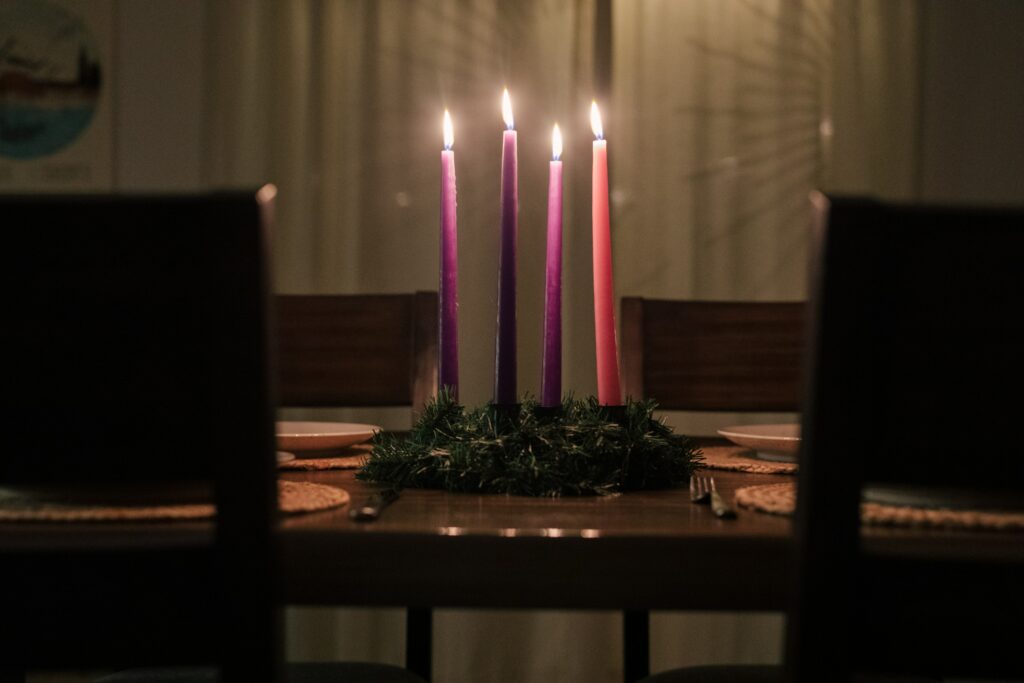
Advent is not just a countdown to Christmas. The church teaches that Advent is “a period of devout and expectant delight” (Universal Norms on the Liturgical Year and the General Roman Calendar, 39). Advent teaches us to live like people who expect something delightful to happen. Advent teaches us to hope.
And Matthew teaches us why we have hope. We know that Christ is coming to make all things new.
The close of the Jubilee overlaps with Advent—the season of hope. Now is an ideal time to re-examine how we reflect the hope of Christ, both as catechumenate ministers and as a parish.
Judgment is a source of hope
Another catechumen—not the former atheist—told me she is afraid of going to hell. For many people, Matthew’s image of the Last Judgment is terrifying. But the church understands biblical judgment as fundamentally hopeful. Judgment is God seeing all things, setting all things right, making justice and mercy stronger than any sin.
For the fearful, this is a great consolation. Their lives matter. Their choices matter. God’s love matters. Christ’s judgment is not condemnation for mistakes we’ve made. Christ is a loving Advocate who longs to welcome and embrace us.
For those who do not yet know Christ, they will see that judgment is hope because it proclaims an end to injustice, suffering, and oppression. In the end, God will make all things new. And the way they will come to know this is through us, the people of hope.
But honestly, I don’t always feel like a radiant beacon of hope. I fret too much; I get discouraged; some days the mountains seem too heavy to move. But Matthew reminds me that hope is not something I can manufacture. Sunday after Sunday, I re-learn that hope is something God gives freely. Even in my small acts of presence—listening, encouraging, simply being with someone—I am participating in God’s saving work.
That is the art of accompaniment. And it transforms the waiting of Advent into the sending of mission.
How Advent forms ministers of hope
Our brief look at Advent shows us why the catechumenate relies so deeply on the liturgical year. The liturgy is the church’s most powerful formation tool. When catechumens hear Matthew’s gospel and connect it with their own stories, they meet Christ. And when they see you responding to that same Word with real joy, real trust, and real hope, they learn what faith looks like. Your example shapes their faith.
Advent forms us into people who expect God’s action. The liturgical season trains us to radiate hope and to act with justice and mercy. Advent reminds us that we are pilgrims of hope, bearing the Light of Christ and trusting God’s promises.
Your journey this Advent, with all its struggles and small acts of faithfulness, is itself a sign of God’s hope for those you accompany.
All our seekers arrive longing for something deeper, whether or not they can name it. This Advent, let your seekers know by the way you live that hope is real, God is near, and Christ is coming to make all things new.
Please share your thoughts
What are you hopeful for this Advent? What are your seekers hoping for? How will your journey of hope shape the way you accompany them?










Thank you for this beautiful and thoughtful article. I love the teaching that says Advent is “a period of devout and expectant delight.” I will remember this. I have often struggled to live Advent in a world that is already celebrating Christmas.
You mention, “Even in my small acts of presence—listening, encouraging, simply being with someone—I am participating in God’s saving work.”
I’ve discovered over the years that accompanment is the most important thing we can do. It is the best way we can bring God and His love and presence to the world – one person at a time.