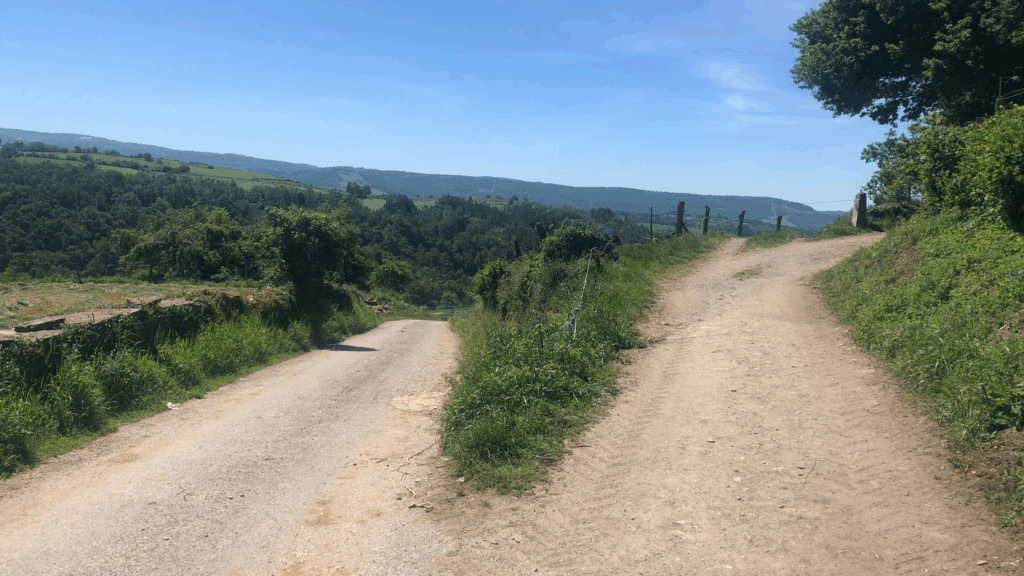
Many parish teams choose a safe, predictable path when forming seekers. We rely on our lesson plans, our schedules, our outlines, and it all feels responsible, even holy. But what if the Spirit is calling us somewhere less familiar, less comfortable and yet, more far more compelling?
Over the past few weeks, we’ve been reflecting together on Pope Leo XIV’s new apostolic exhortation, Dilexi te. On the surface, he says nothing about the catechumenate or initiation ministry. But his message carries a strong challenge for every catechumenate team.
We now stand at a crossroads. We can continue to follow the familiar path — organizing lessons, checking boxes, and hoping the seekers are “getting it.” Or we can embrace a new paradigm that centers on conversion to Jesus Christ and lived discipleship of the gospel mission. This is a costly path that demands more of us than schedules and lesson plans.
In Dilexi te, Pope Leo compels us to choose this costly path of discipleship. Caring for the poor, he reminds us, is not a consequence of faith but a prerequisite for it. Our familiar, predictable methods are insufficient for forming missionary disciples. Instead, we are called into the unpredictable, Spirit-led work of accompanying seekers on the path of justice and mercy.
The crossroad before us
Many teams have relied on the “school model,” using lectures, videos, handouts, and doctrinal lesson plans. It is tempting to stick with this model because “catechesis” can be written down and compressed into a six to nine-month schedule. It all feels so neat and tidy. And we worry that if don’t have a written schedule, we might miss something. We might fail to transmit all the necessary knowledge about Catholicism.
But the mystery of Jesus Christ cannot be compressed into a lesson plan.
Shifting away from the classroom model is hard. It means letting go of the reins and trusting the Holy Spirit to lead. It means taking seriously the church’s teaching that for each seeker, the journey of faith “varies according to the many forms of God’s grace, the free cooperation of individuals, the action of the Church, and the circumstances of time and place” (OCIA 5).
If each person’s faith journey varies from everyone else’s, that variety can feel chaotic. It requires us to train sponsors who can model discipleship and draw seekers into parish life. It forces catechumenate leaders to move from being teachers to becoming companions and guides.
But this is the work of grace that we signed up for. Sometimes, the Spirit-driven work of walking with real people is messy and unpredictable.
Shifting away from the classroom model is hard. It means letting go of the reins and trusting the Holy Spirit to lead.
The problem with the predictable path
We know, in our hearts and also from church teaching, that classroom lectures alone cannot form Christians. If we rely solely on classroom instruction, we risk producing knowledgeable people who don’t yet know how to live the gospel.
In Dilexi te, Pope Leo warns that we are in danger of replacing the gospel with “the wisdom of this world,” nurturing a spiritual worldliness that separates faith from active love for the poor (Dilexi te, 15).
The danger of the school model is that it teaches about Christ without requiring us to follow Christ.
Why apprenticeship is the only way forward
The goal of the catechumenate is not to produce graduates but to initiate disciples into Jesus Christ and the mission of the gospel. The Order of Christian Initiation of Adults is explicit that this formation is accomplished through the apprenticeship model. Specifically, the rite references the Second Vatican Council where the world’s bishops said:
The catechumenate is not a mere expounding of doctrines and precepts, but a training period in the whole Christian life, and an apprenticeship duly drawn out, during which disciples are joined to Christ their Teacher.
– Decree on the Missionary Activity of the Church, 14
To offer “an apprenticeship duly drawn out,” the Order of Christian Initiation of Adults says, we must root seekers in the core practices of Christian life, especially “love of neighbor, even at the cost of self-renunciation” (OCIA 75.2).
Pope Leo takes that vision a step further in Dilexi te. He reminds us that love of neighbor is not just a moral task but the place of divine revelation itself:
The poorest are not only objects of our compassion, but teachers of the Gospel. It is not a question of “bringing” God to them, but of encountering him among them.
Dilexi te, 79
In other words, the apprenticeship of faith happens where disciples meet Christ in the poor. The catechumenate cannot be complete until it leads seekers there.
This shift requires profound humility. It’s not just about helping the poor. Rather, it’s about allowing them to evangelize us. That transformation can be uncomfortable because it upends the familiar roles we’re used to playing. But there is no alternative if we want to form authentic disciples.
The costly path of the gospel
By embracing the apprenticeship model — by apprenticing seekers in mercy, justice, and love — we reveal the church’s “most authentic self” (Dilexi te, 76). We prepare seekers not just to believe in Christ, but to live and suffer and rejoice with him.
This is the costly path of the gospel. If we dare to walk it, we will find Christ waiting for us — among the poor, the marginalized, and the brokenhearted. And when our seekers come to know him there too, the catechumenate will have fulfilled its task, drawing all of us into deeper and deeper conversion to Jesus Christ.
Walking this path is not comfortable. It demands humility, courage, and a willingness to be transformed alongside those we serve. But it is precisely this costly sacrifice that forms authentic disciples.
Free Online Training for Catechumenate Teams
Where seekers meet Christ: Teaching our faith by touching the poor
Free Online Training for Catechumenate Teams
Wednesday, November 13, 2025
11am PDT / 2pm EDT